20 Bolivian Spanish Slang Words and Expressions Only Locals Use
Bolivian Spanish borrows heavily from Quechua and Aymara, which is why it can surprise learners who arrive fluent from anywhere else. Here are 20 slang words and expressions with real examples.
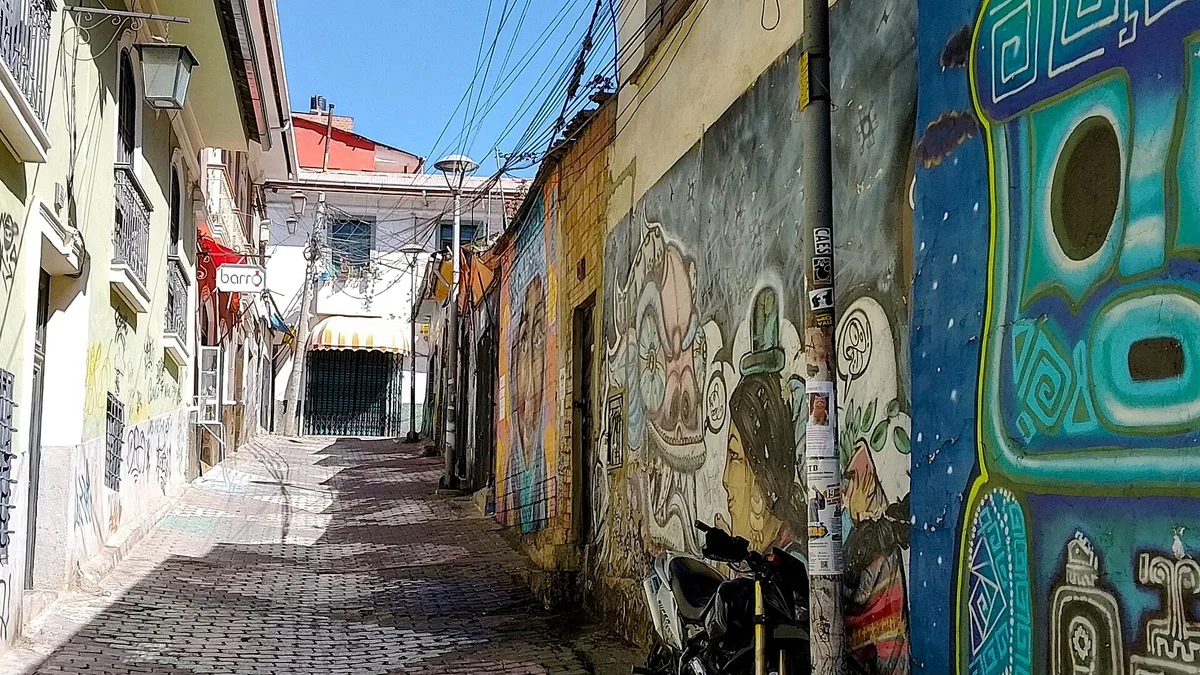
Learners who arrive in La Paz with solid Spanish tend to hit the same wall. The grammar is familiar, the speed is manageable, and then half the nouns in the sentence are not Spanish at all. Bolivian Spanish slang leans on Quechua and Aymara more heavily than almost any other variety, and those borrowed words are exactly the ones that come up in daily conversation.
This guide covers 20 words and expressions you will hear in Bolivia, with what each one means and an example. Where a word comes from Quechua or Aymara, it is marked, because that is the pattern worth learning rather than the individual word.
Words Bolivia Took From Quechua and Aymara
1. Imilla
A girl or young woman, from Aymara and Quechua. Widely used, though tone matters: it can be affectionate or dismissive depending on who is speaking.
Example: "Esa imilla canta bien." ("That girl sings well.")
2. Wawa
A baby or small child, from Quechua. Used across the Andes and completely normal in Bolivian Spanish.
Example: "La wawa se durmió." ("The baby fell asleep.")
3. Ch'aki
The hangover, from Quechua, where the root means dry. Bolivians say estar con ch'aki, and the spelling turns up as jaki or chaqui too.
Example: "Amanecí con un ch'aki terrible." ("I woke up with a terrible hangover.")
4. Api
A hot, thick purple corn drink, drunk at breakfast with fried pastries. Not slang, but a word you need on your first cold morning.
Example: "Un api con pastel, por favor." ("An api with a pastry, please.")
5. Cochala
Someone from Cochabamba. Regional nicknames are constant in Bolivia and you will be assigned one within a day of arriving.
Example: "Mi novia es cochala." ("My girlfriend is from Cochabamba.")
Describing People
6. Waso
Rude, crude, badly mannered. One of the most Bolivian insults there is, and mild enough to be used among friends.
Example: "No seas waso, saluda." ("Don't be rude, say hello.")
7. Camba
Someone from the eastern lowlands, above all Santa Cruz. Used as a straightforward regional identity, and claimed proudly by the people it names.
Example: "Los cambas comen más yuca que papa." ("People from the east eat more cassava than potato.")
8. Colla
The counterpart to camba: someone from the Andean highlands, La Paz, Oruro, Potosí. The camba and colla divide is the first geography lesson any visitor gets.
Example: "Ella es colla, de Oruro." ("She's from the highlands, from Oruro.")
9. Yatiri
An Aymara traditional healer and reader of coca leaves. A real profession, not a joke, and a word that comes up in ordinary conversation.
Example: "Fue a ver a un yatiri." ("He went to see a traditional healer.")
Vocabulary like this is hard to absorb from a list, because the words that matter are the ones tied to a place and a moment. Our short stories in Spanish from Bolivia put this vocabulary inside real Bolivian scenes, which is how it starts to stick.
10. Chango, changa
A young man or young woman, a kid. Common and affectionate.
Example: "Ese chango trabaja con nosotros." ("That kid works with us.")
Reactions and Fillers
11. Pucha
An all purpose exclamation of surprise, annoyance or sympathy, and a polite substitute for something stronger. Heard across the southern cone but constant in Bolivia.
Example: "¡Pucha! Se me olvidó." ("Damn, I forgot.")
12. Elay
An emphatic interjection, roughly "there you go" or "see". Very Bolivian, often lengthened to elaaay.
Example: "Elay, te lo dije." ("See, I told you.")
13. Ya pues
Two small words doing a lot: "come on", "alright then", "get on with it". The pues at the end of sentences is one of the clearest markers of Andean Spanish.
Example: "Ya pues, vamos." ("Come on, let's go.")
14. Jailón
A rich, showy person, someone from the social elite. Mildly mocking.
Example: "Ese restaurante está lleno de jailones." ("That restaurant is full of rich kids.")
Everyday Situations
15. Trufi
A shared taxi that runs a fixed route, the backbone of urban transport. Along with the micro, it is how most people get to work.
Example: "Tomá el trufi hasta la plaza." ("Take the shared taxi to the square.")
16. Chuño
Freeze dried potato, made by leaving potatoes out in the Andean night frost. A staple food and a word with no English equivalent.
Example: "El plato viene con chuño." ("The dish comes with freeze dried potato.")
17. Salteña
The Bolivian baked pastry filled with stew, eaten mid morning. Ordering one correctly is a small local test.
Example: "Compramos salteñas antes de la reunión." ("We bought salteñas before the meeting.")
18. Chapar
To kiss, or to catch someone. Context decides which.
Example: "Los chaparon saliendo del cine." ("They caught them coming out of the cinema.")
19. Bien
Bolivians stack bien where other varieties would use muy. Bien lindo rather than muy lindo. It sounds odd at first and then becomes automatic.
Example: "Está bien lejos." ("It's really far.")
20. Cholita
A woman of Aymara or Quechua heritage who wears the traditional pollera skirt and bowler hat. Once a slur, reclaimed and now used with pride, including by the women themselves. Handle with respect and follow the lead of the people around you.
Example: "Las cholitas luchadoras son famosas en El Alto." ("The wrestling cholitas are famous in El Alto.")
Why Bolivian Spanish Borrows So Much
Bolivia has 36 recognised official languages. Quechua and Aymara are not historical curiosities there, they are spoken daily by millions of people, and Spanish has lived alongside them for centuries rather than replacing them.
That contact shows up in three places. In vocabulary, which is what this list mostly covers. In the pues and ya that pile up at the end of Andean sentences, a rhythm borrowed from those languages. And in verb use: constructions like dice que to report something you did not witness echo the evidential markers Quechua builds into its grammar, where a speaker must signal whether they saw a thing or only heard about it.
For a learner this means Bolivian Spanish is not a harder accent, it is a different vocabulary floor. Once you have the borrowed nouns, the rest is Spanish you already know.
Camba and Colla: the Divide Behind Half the Slang
You cannot get far in Bolivian Spanish without meeting this pair, because a surprising amount of the vocabulary sorts itself along the same line.
Colla covers the Andean highlands: La Paz, El Alto, Oruro, Potosí, Cochabamba. Cold, high altitude, Quechua and Aymara everywhere, potatoes and chuño on the plate. Camba covers the eastern lowlands around Santa Cruz: tropical, hotter, faster speech, Spanish with far less Quechua in it, cassava instead of potato.
The two speak noticeably differently. Highland Spanish is slower and stacks the pues and ya this article keeps mentioning. Lowland Spanish clips the final s and sounds closer to Caribbean or Paraguayan Spanish than to La Paz. A word that is everyday in one half can draw a blank in the other.
Both terms were once thrown as insults across that divide and both are now worn as identity, which is why you will hear people describe themselves as one without hesitation. As a visitor, the useful move is to notice which half you are in and expect the vocabulary to shift when you cross.
How to Start Using These
- Begin with pucha, ya pues and bien as an intensifier. Zero risk and they change your rhythm immediately.
- Learn camba and colla early. Regional identity is present in almost every conversation and getting it wrong is awkward.
- Leave imilla, waso and cholita to be understood rather than used until you can read the tone in the room.
To keep exploring Andean and neighbouring varieties, read our guides to Peruvian Spanish slang, Ecuadorian Spanish slang and Chilean Spanish slang. For the same vocabulary in story form, the short stories in Spanish from Bolivia collection is the natural next step.