20 Dutch Idioms and Expressions Locals Use Every Day
Dutch idioms are famously strange in translation: monkeys come out of sleeves, cats are bought in bags, and bad news is peanut butter. Here are 20 with what they actually mean.
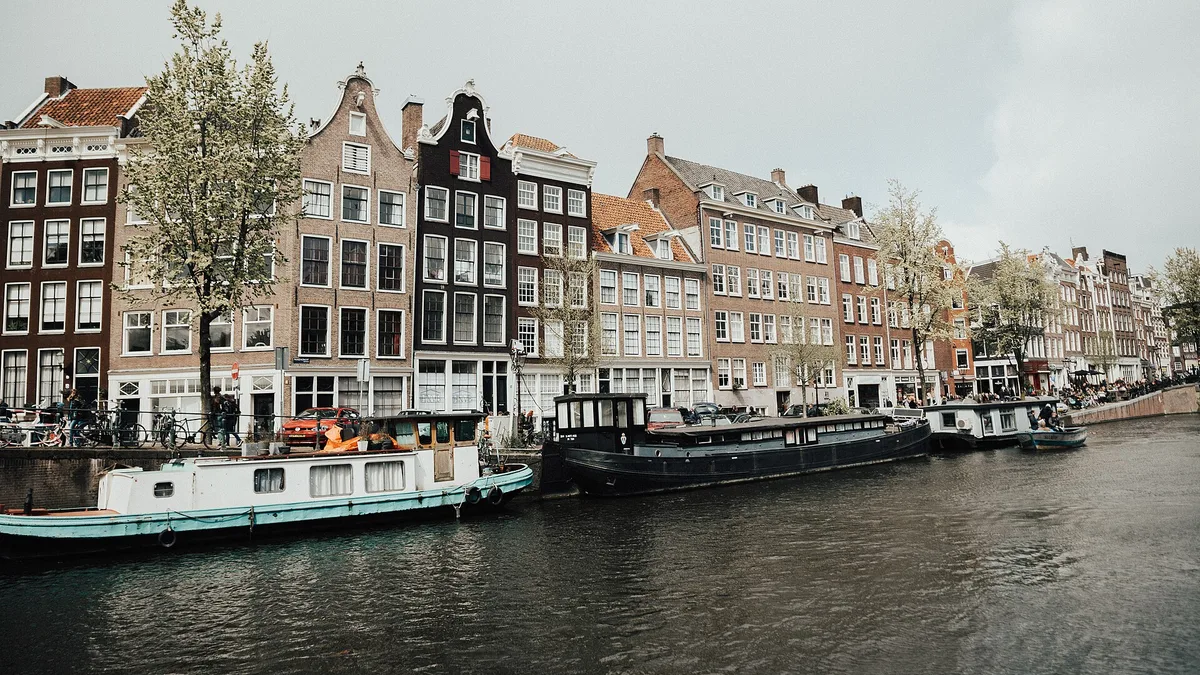
Dutch has a reputation for blunt speech, and its idioms are where that reputation comes from. When something finally becomes clear, a monkey comes out of a sleeve. When you buy without checking, you buy a cat in a bag. When something goes wrong, the answer is peanut butter. Dutch idioms are direct, physical and almost impossible to guess from the words alone.
This guide covers 20 of them, with the literal translation, the real meaning and an example. These are everyday expressions, not literary ones: you will hear them in offices, in shops and on the train.
When Things Go Wrong
1. Helaas pindakaas
Literal: Unfortunately, peanut butter. Meaning: Too bad, tough luck. It rhymes, which is the entire reason it exists, and it is used constantly.
Example: "De winkel is dicht. Helaas pindakaas." ("The shop is closed. Too bad.")
2. Nu komt de aap uit de mouw
Literal: Now the monkey comes out of the sleeve. Meaning: The truth finally comes out. From street performers who hid a monkey in their sleeve.
Example: "Hij wilde alleen geld lenen. Nu komt de aap uit de mouw." ("He just wanted to borrow money. Now the truth comes out.")
3. Een kat in de zak kopen
Literal: To buy a cat in the bag. Meaning: To be sold a dud, to buy something without checking it first. English says "a pig in a poke".
Example: "Koop die auto niet ongezien, straks koop je een kat in de zak." ("Don't buy that car unseen, you'll end up with a dud.")
4. De pineut zijn
Literal: To be the pineut. Meaning: To be the one who ends up paying for it, the one left holding the problem.
Example: "Als het misgaat ben ik de pineut." ("If it goes wrong, I'm the one who suffers.")
5. Het regent pijpenstelen
Literal: It's raining pipe stems. Meaning: It's pouring. The Dutch equivalent of raining cats and dogs, and given the weather, a phrase with plenty of use.
Example: "Neem een jas mee, het regent pijpenstelen." ("Take a coat, it's pouring.")
Money, Work and Directness
6. Iets voor een appel en een ei kopen
Literal: To buy something for an apple and an egg. Meaning: To buy it dirt cheap.
Example: "Ik heb die fiets voor een appel en een ei gekocht." ("I bought that bike for next to nothing.")
7. Met de deur in huis vallen
Literal: To fall into the house with the door. Meaning: To get straight to the point without any preamble. Considered a virtue here rather than rudeness.
Example: "Ik val maar met de deur in huis: we moeten praten." ("I'll get straight to the point: we need to talk.")
8. De kool en de geit sparen
Literal: To spare the cabbage and the goat. Meaning: To try to please both sides, usually at the cost of solving nothing. Often said of politicians.
Example: "Dat voorstel spaart de kool en de geit." ("That proposal tries to keep everyone happy.")
9. Iets onder de knie hebben
Literal: To have something under the knee. Meaning: To have mastered it.
Example: "Ik heb de grammatica eindelijk onder de knie." ("I've finally got the grammar down.")
10. Met je neus in de boter vallen
Literal: To fall with your nose in the butter. Meaning: To arrive at exactly the right moment, usually just as food is served.
Example: "Je valt met je neus in de boter, we gaan net eten." ("You've got great timing, we're about to eat.")
Idioms are hard to absorb from a list, because each one belongs to a situation. Our Short Stories in Dutch put language like this inside real scenes, which is how it starts to sound natural rather than memorised.
People and Behaviour
11. Doe normaal
Literal: Act normal. Meaning: Behave yourself, stop showing off. It is attached to the national saying doe maar normaal, dan doe je al gek genoeg, "just act normal, that's crazy enough already", which tells you a great deal about Dutch social norms.
Example: "Doe normaal, man." ("Get a grip.")
12. Over koetjes en kalfjes praten
Literal: To talk about little cows and little calves. Meaning: To make small talk.
Example: "We praatten wat over koetjes en kalfjes." ("We made some small talk.")
13. Iemand een oor aannaaien
Literal: To sew an ear onto someone. Meaning: To trick or con someone.
Example: "Ze hebben hem een oor aangenaaid met dat contract." ("They took him for a ride with that contract.")
14. Uit je nek kletsen
Literal: To chatter out of your neck. Meaning: To talk nonsense.
Example: "Hij kletst uit zijn nek, dat klopt niet." ("He's talking rubbish, that isn't right.")
15. De handdoek in de ring gooien
Literal: To throw the towel in the ring. Meaning: To give up, straight from boxing, same as English.
Example: "Na drie maanden gooide ze de handdoek in de ring." ("After three months she threw in the towel.")
Effort, Luck and Everyday Life
16. Twee vliegen in één klap slaan
Literal: To hit two flies with one blow. Meaning: To kill two birds with one stone.
Example: "Zo sla ik twee vliegen in één klap." ("That way I kill two birds with one stone.")
17. Het gaat van een leien dakje
Literal: It goes off a little slate roof. Meaning: It's going smoothly, without a hitch.
Example: "De verhuizing ging van een leien dakje." ("The move went off without a hitch.")
18. Ergens geen kaas van gegeten hebben
Literal: To have eaten no cheese of something. Meaning: To know nothing about a subject. Of course the cheese one is about ignorance.
Example: "Van techniek heb ik geen kaas gegeten." ("I know nothing about technology.")
19. Nu breekt mijn klomp
Literal: Now my clog breaks. Meaning: I'm completely astonished. Yes, the clogs made it into the language.
Example: "Hij is met haar getrouwd? Nu breekt mijn klomp." ("He married her? Well I never.")
20. Slapen als een os
Literal: To sleep like an ox. Meaning: To sleep very deeply. Where English uses a log, Dutch uses an ox.
Example: "Ik heb geslapen als een os." ("I slept like a log.")
What These Idioms Tell You About Dutch
Read them together and three things stand out.
The first is how domestic the imagery is. Butter, cheese, cabbages, goats, cows, clogs, slate roofs. These are not idioms built from mythology or literature, they come from farms and kitchens, and they survived because everyone in the room had touched the objects involved.
The second is the directness. Met de deur in huis vallen, getting straight to the point, is a compliment in Dutch. So is doe normaal. A culture that made "act normal" into a national motto is going to produce idioms that puncture rather than decorate, and learners coming from more indirect languages often read Dutch bluntness as rudeness when it is simply the register.
The third is how few of them map onto English. Two birds with one stone becomes two flies with one blow. A log becomes an ox. A pig in a poke becomes a cat in a bag. The structure is recognisable and the animal is always wrong, which is exactly the kind of small difference that trips up a learner who translates instead of listening.
How to Start Using Them
- Begin with helaas pindakaas and doe normaal. Both are extremely common, neither carries risk, and using them correctly gets a reaction.
- Watch the ones that sound like English but are not. Saying twee vogels met één steen instead of twee vliegen in één klap is a giveaway.
- Save nu breekt mijn klomp for genuine astonishment. Used casually it sounds like you learned it from a phrasebook, which you did.
This is the first Dutch guide on the blog, so if you are learning the language, start here and work outward. For the same language in story form, the Short Stories in Dutch collection is the natural next step. If you want to compare how other languages build the same kind of expression, our guides to German idioms that make no sense in English and everyday French idioms cover the neighbours.