20 European Portuguese Idioms and Expressions Locals Use
Most Portuguese you find online is Brazilian. In Portugal, people say fixe, giro and tá-se bem, and they have idioms about sardines, olive oil and Judas. Here are 20 European Portuguese idioms and expressions with meanings and examples.
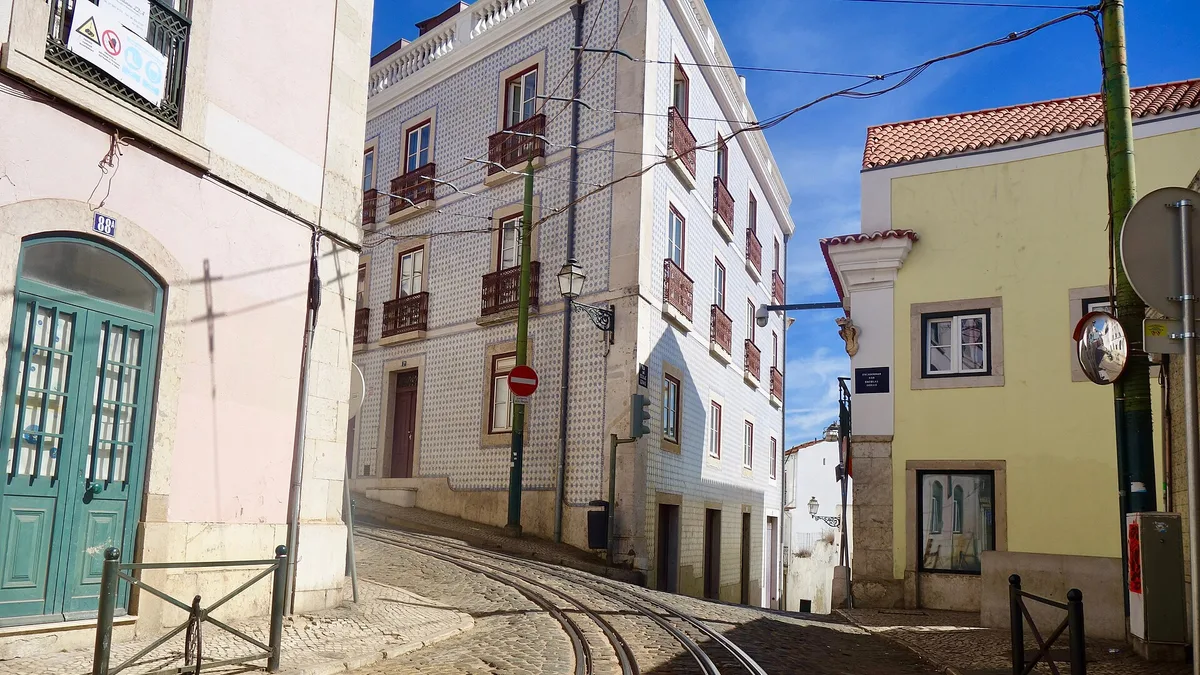
If you learned Portuguese from apps, series and music, you almost certainly learned the Brazilian variety. Then you land in Lisbon and a waiter says "tá-se bem", a friend calls your jacket "giro", and someone tells you that a colleague is "at the end of the line". These European Portuguese idioms are the everyday texture of the language in Portugal, and most of them are rare or unknown in Brazil.
This guide covers 20 expressions you will actually hear in Lisbon, Porto and the rest of the country, with the literal translation, the real meaning, and an example. Where an expression also exists in Brazil we say so; where it marks you as clearly Portuguese, we say that too.
Everyday Words That Say "Portugal"
1. Fixe
The word for "cool", "nice" or "great". Brazilians say "legal"; Portuguese people say "fixe" (pronounced roughly "feesh"). It works for a film, a plan or a person.
Example: "O concerto foi muito fixe." ("The concert was really cool.")
2. Giro / gira
Literally something like "spinning" or "turning", but in Portugal "giro" means cute, pretty or good looking, for people and for things. A "casa gira" is a lovely house; a "rapaz giro" is a handsome guy.
Example: "Que casaco tão giro, onde o compraste?" ("What a nice jacket, where did you buy it?")
3. Tá-se bem
A contraction of "está-se bem", literally "one is well". It means "all good", "fine by me", "OK then". It is informal, extremely common among younger speakers, and almost never heard in Brazil.
Example: "Vamos às nove? Tá-se bem." ("Shall we go at nine? Sounds good.")
4. Pá
A filler word that comes from "rapaz" (boy). It works like "man" or "mate" and softens or emphasises almost any sentence. Lisbon conversation is full of it.
Example: "Pá, não sei o que te diga." ("Man, I don't know what to tell you.")
5. Bué
From Angolan Portuguese, now standard slang in Portugal for "very" or "a lot". Teenagers and twenty somethings use it constantly.
Example: "Estava bué frio ontem à noite." ("It was really cold last night.")
Idioms About Food and the Sea
6. Estar com os azeites
Literally "to be with the olive oils". It means to be in a bad mood, irritated, grumpy. Olive oil is everywhere in Portuguese life, including its idioms.
Example: "Não fales com ele agora, está com os azeites." ("Don't talk to him now, he is in a foul mood.")
7. Puxar a brasa à sua sardinha
Literally "to pull the ember towards your own sardine". It means to look after your own interests, to steer a situation your way. The image is a shared grill and everyone nudging the coals under their own fish.
Example: "Claro que ele defende o projeto, está a puxar a brasa à sardinha dele." ("Of course he defends the project, he is looking out for himself.")
8. Ficar em águas de bacalhau
Literally "to end up in cod water". It means that a plan or promise came to nothing, that it fizzled out. Cod, "bacalhau", is the national dish, so of course it has its own idiom.
Example: "A reforma da escola ficou em águas de bacalhau." ("The school renovation never went anywhere.")
9. Ir aos arames
Literally "to go to the wires". It means to lose your temper, to blow up. You will also hear "passar-se", which is stronger and more informal.
Example: "Quando viu a fatura, foi aos arames." ("When she saw the bill, she hit the roof.")
10. Muitos anos a virar frangos
Literally "many years turning chickens". It describes long experience and skill, the way a grill cook who has spent decades turning chickens knows exactly what he is doing. Often said with a smile.
Example: "Não te preocupes, ele resolve isso. São muitos anos a virar frangos." ("Don't worry, he will sort it out. He has years of experience.")
If you want to hear these expressions inside real conversations rather than in a list, our Colloquial Portuguese Stories are written in the Portuguese of Portugal, with the everyday idioms glossed as you read.
Idioms About People and Situations
11. Estar nas tintas
Literally "to be in the paints". It means not to care at all. It is the Portuguese way of saying "I couldn't care less".
Example: "Ele está nas tintas para o que os outros pensam." ("He couldn't care less what other people think.")
12. Ficar a ver navios
Literally "to be left watching ships". It means to be left waiting for something that never comes, to be stood up or disappointed. The usual story links it to people waiting on the Lisbon waterfront for a king who never returned.
Example: "Prometeram-me o reembolso e fiquei a ver navios." ("They promised me a refund and I got nothing.")
13. Fazer uma tempestade num copo de água
Literally "to make a storm in a glass of water". It means to blow a small problem out of proportion. English has "a storm in a teacup"; the Portuguese version uses a glass.
Example: "Foi só um atraso de dez minutos, não faças uma tempestade num copo de água." ("It was only a ten minute delay, don't make a mountain out of a molehill.")
14. Estar feito ao bife
Literally "to be done to the steak". It means to be in serious trouble, to be done for. It is one of the most Portuguese sounding idioms on this list.
Example: "Se o chefe descobre, estou feito ao bife." ("If the boss finds out, I am done for.")
15. Ter macaquinhos no sótão
Literally "to have little monkeys in the attic". It means to be a bit crazy, or to imagine things and worry about them for no reason.
Example: "Achas que ela está zangada contigo? Tens macaquinhos no sótão." ("You think she is angry with you? You are imagining things.")
Idioms You Will Hear in Any Conversation
16. À grande e à francesa
Literally "in a big way and French style". It means doing something in style, lavishly, with no expense spared.
Example: "Celebraram o aniversário à grande e à francesa." ("They celebrated the birthday in grand style.")
17. Cair o Carmo e a Trindade
Literally "the Carmo and the Trindade fall down", two Lisbon convents destroyed in the 1755 earthquake. It describes a huge fuss or scandal, as if the world were ending.
Example: "Quando disse que não ia ao jantar de família, caiu o Carmo e a Trindade." ("When I said I was skipping the family dinner, all hell broke loose.")
18. Não vale um caracol
Literally "it is not worth a snail". It means something is worthless. Snails, "caracóis", are a summer snack in Portugal, cheap and tiny, hence the comparison.
Example: "Aquele telemóvel não vale um caracol." ("That phone is worthless.")
19. Dar o braço a torcer
Literally "to give your arm to be twisted". It means to admit you were wrong, to give in. Very often used in the negative: someone who "never gives their arm to be twisted" never admits a mistake.
Example: "Ele sabe que errou, mas nunca dá o braço a torcer." ("He knows he was wrong, but he never admits it.")
20. Pão pão, queijo queijo
Literally "bread bread, cheese cheese". It means speaking plainly, calling things by their name, no beating around the bush.
Example: "Vamos falar pão pão, queijo queijo: o projeto não vai funcionar." ("Let's be blunt: the project is not going to work.")
How to Make These Expressions Yours
European Portuguese is spoken fast and with swallowed vowels, so idioms are easier to recognise in writing first and in speech second. A few tips:
- Start with the short ones. "Fixe", "giro", "tá-se bem" and "pá" appear in almost every casual exchange, and using them correctly instantly changes how people respond to you.
- Learn the story behind the image. Cod water, the fallen convents, the sardine on the grill: once you know the picture, the meaning sticks.
- Listen for Portugal specifically. If your input is mostly Brazilian, many of these will never come up. Seek out Portuguese podcasts, series and books written in the European variety.
To keep going, compare these with our 20 Brazilian Portuguese idioms locals use every day and see how the two varieties differ, read 20 everyday French idioms if you are curious how a neighbouring language handles the same ideas, and learn the difference between an idiom and a saying. For practice in context, Portuguese Tales of the Sea and The 5-Minute European Portuguese Journal for Beginners are the natural next step.