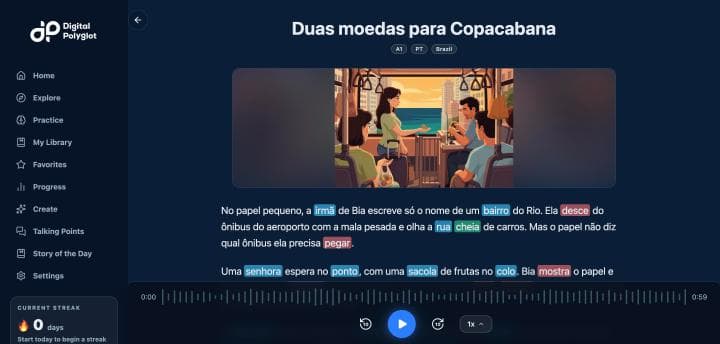
Your class reads a whole story on the first try.
Around 154 words, written for one level and one city, narrated by a human-sounding voice, and every word explained in the sentence it appears in. They finish it on the bus; you teach on what they read.
Why a story beats a worksheet
Three things have to line up for reading to teach anything: the text has to be within reach, the learner has to hear it, and the new words have to come back. The reader does all three.
Text they can already read
Each story is written for one level, not graded down from a newspaper. About 150 words, one scene, one city, five or six new words carried by the plot.
They finish it, so they read the next one.
Heard while it is read
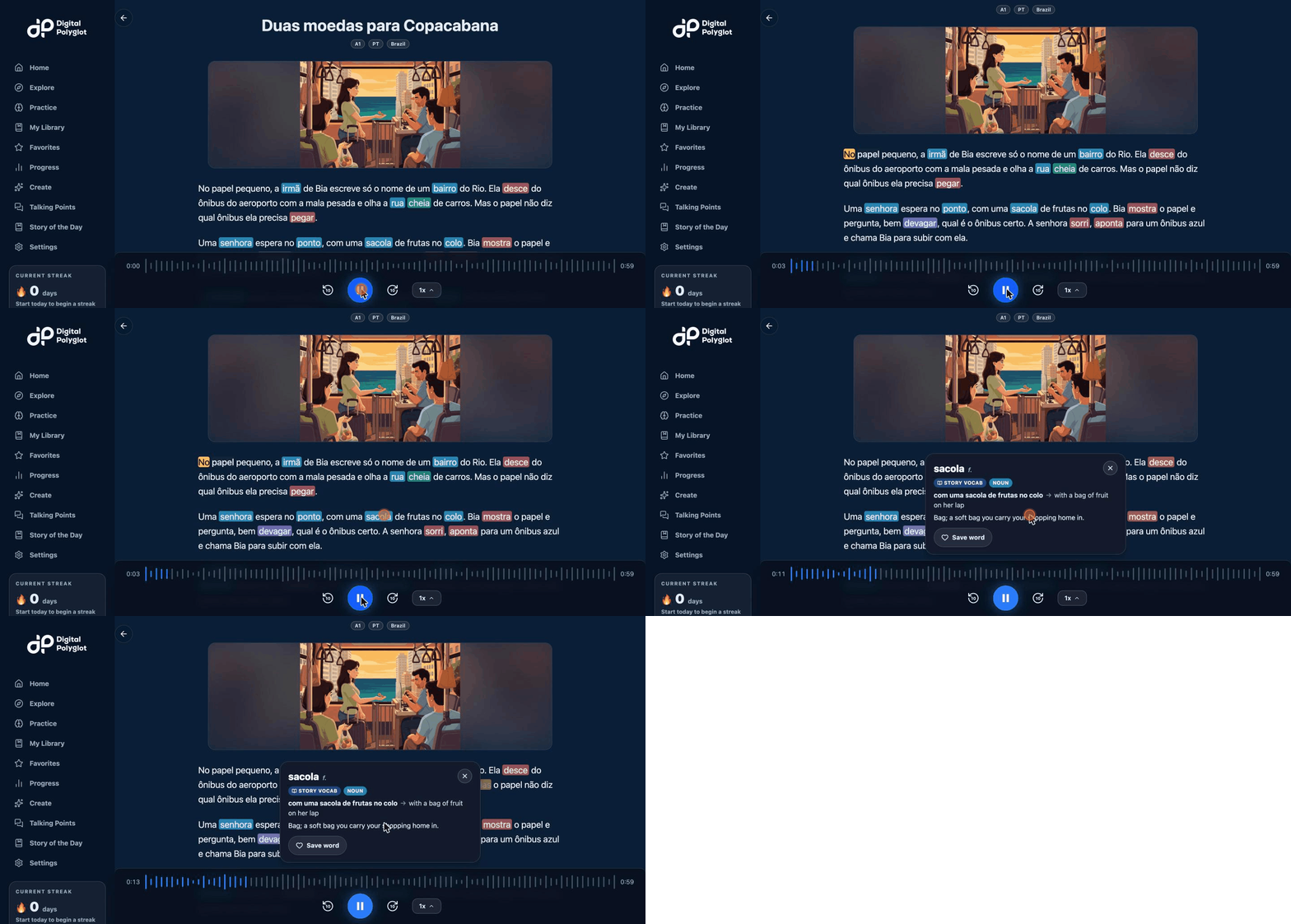
Every story is narrated, and the word being spoken lights up as it goes. The learner ties the spelling to the sound and to where the stress falls.
A slow reader keeps the line instead of stalling.
Meaning now, recall later
A tapped word explains itself in that sentence, not in a dictionary entry, and goes to the learner's own list. Practice brings it back on its own schedule.
No glossary to photocopy, no lookups that break the reading.
What a student actually does
Recorded in the app, not a mock-up. The story is "Duas moedas para Copacabana", Portuguese A1.
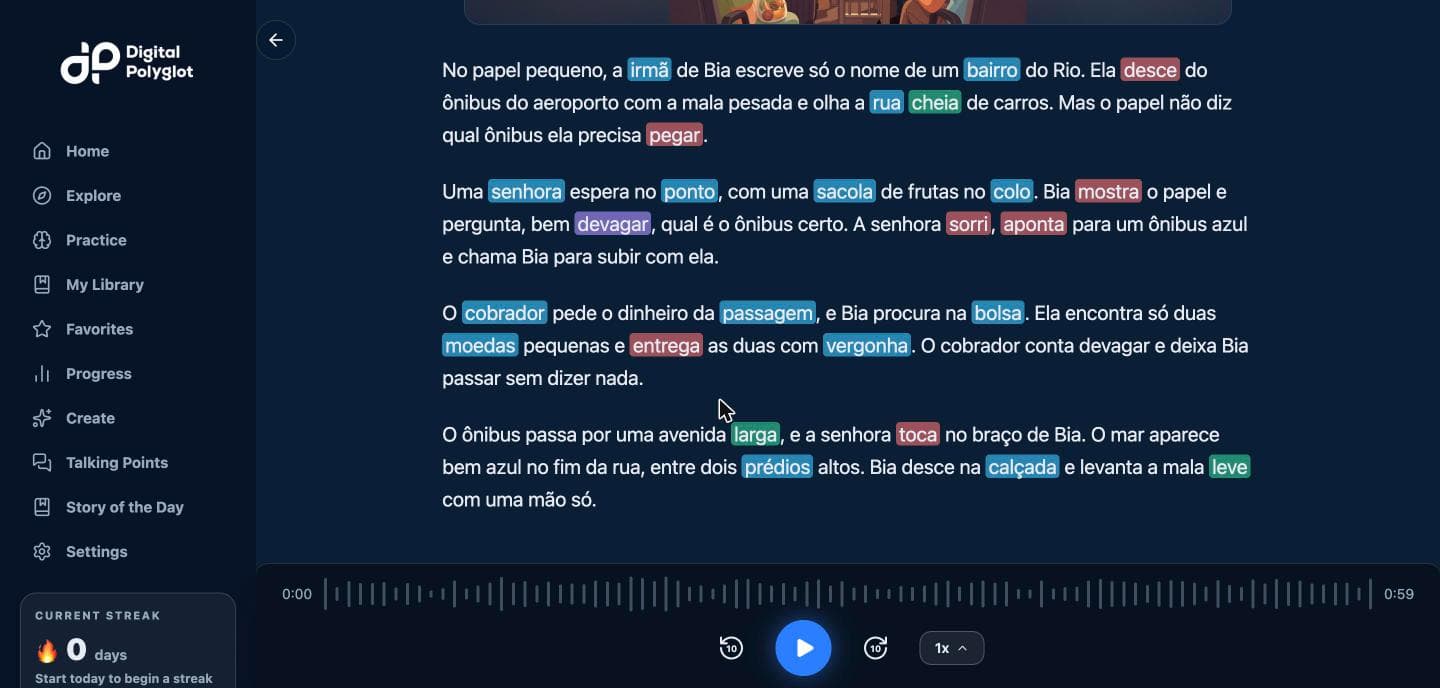
The words worth teaching are already marked
Colour by kind: nouns, verbs, expressions. That is your vocabulary list for the lesson, and it came from the story.
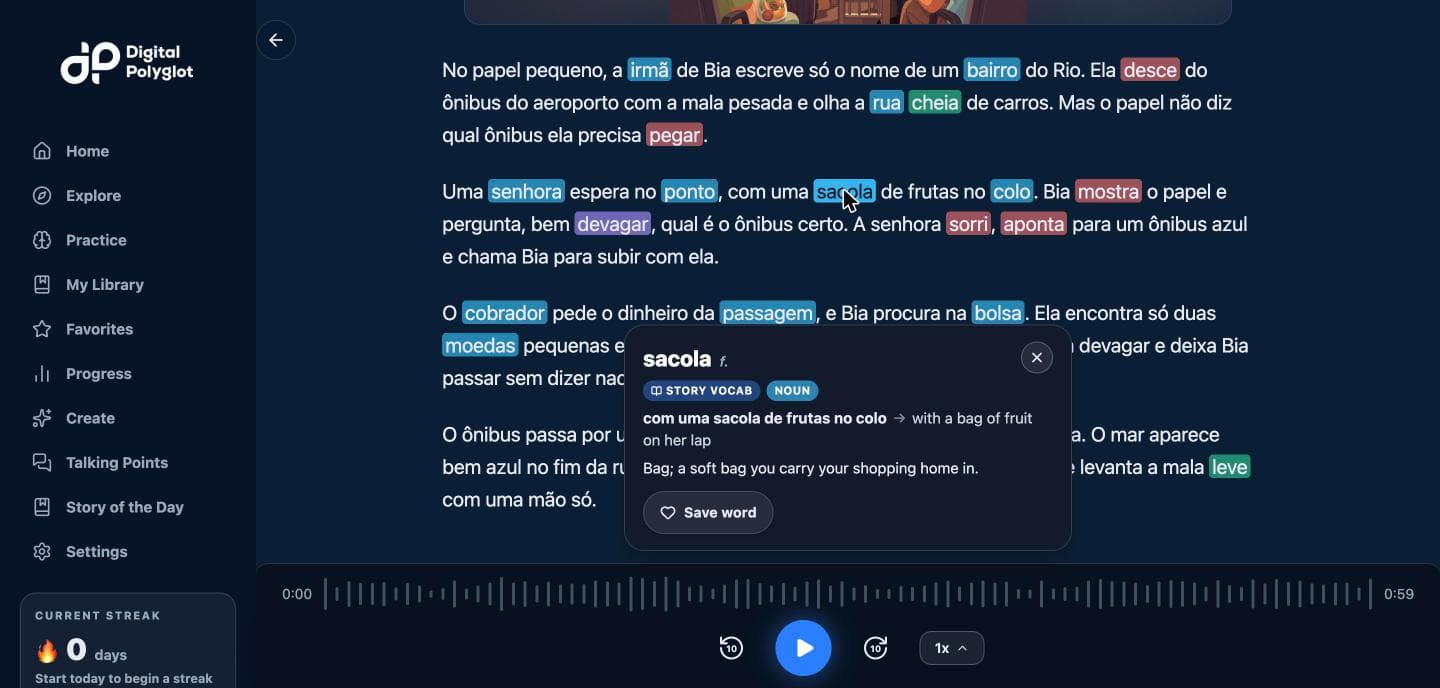
A tap explains the sentence, not the dictionary
"com uma sacola de frutas no colo" becomes "with a bag of fruit on her lap". Then one tap saves it for practice.
Thursday, the words come back
Every word they saved returns as a gap in a sentence from the story they read, not in a list they never met. Six words, under two minutes.
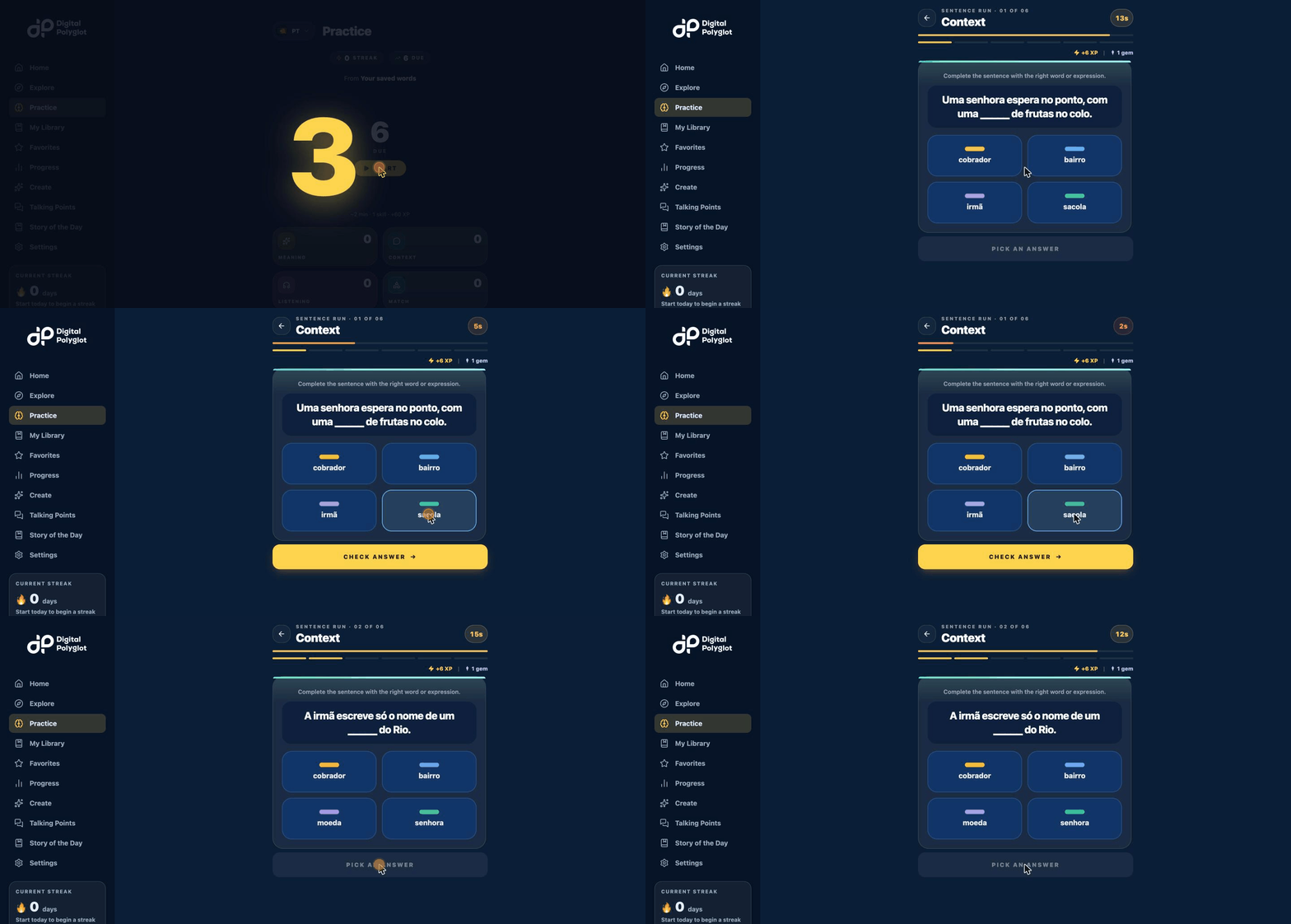

On a phone it is the same reader, which is where most of them will do it.
What it changes for you
Monday takes four minutes
Pick a story, copy the link into your usual channel. No worksheet, no glossary, no audio to record.
One class, three levels
The same kind of topic exists at A1 and at B1. Send each group the level that fits and talk about one story in class.
They arrive having read it
Three minutes of homework with the audio in their ears beats two pages nobody opens.
What there is to teach from
Courses published today. Each one is 21 stories: seven topics, three stories each. Open a topic and it lists the words those three stories teach, before you plan the week.
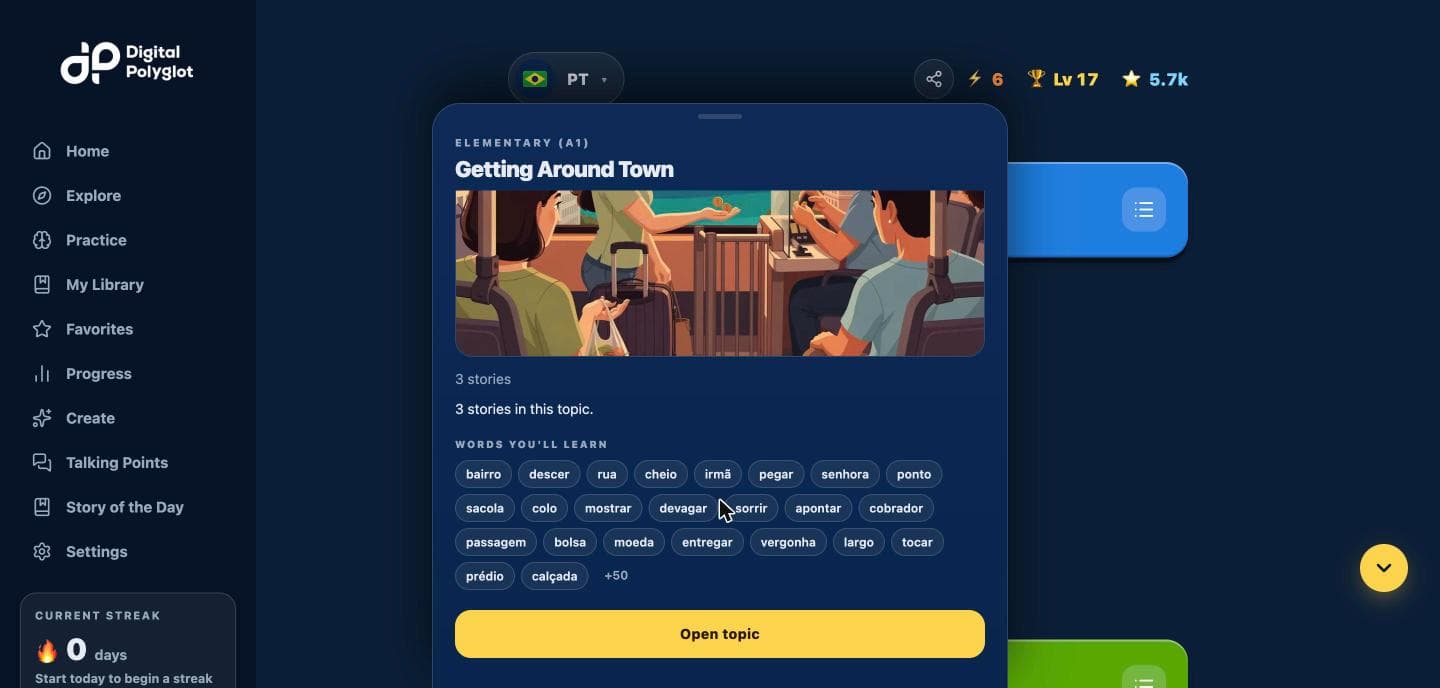
A topic is a week, with its word list attached
"Getting Around Town", A1: three stories, 24 words on the card and 50 more behind it.
| Language | Starter | A0 | A1 | A2 | B1 | B2 | C1 | Cities |
|---|---|---|---|---|---|---|---|---|
| Spanish | 2 | 7 | 8 | 6 | 4 | 3 | 3 | Buenos Aires, Madrid, Vitoria, Nerja, Guadalajara, Salamanca, Medellin, Valparaiso, Santiago de Compostela |
| Portuguese | - | 2 | 2 | 2 | 2 | 1 | - | Brasilia, São Paulo, Rio de Janeiro |
| German | - | 2 | 1 | 1 | 1 |
What it costs
Today a teacher and each student pay the same way as any reader.
| Premium monthly | €14.99 |
| Premium annual | €149 |
| Launch offer, first year | €89 |
| Class seats | Ask us |
What we do not have yet
No teacher dashboard, so you cannot follow a student's progress from your own account. No group seats on sale, and no printing licence. Write to us for any of the three and we will sort it by hand while we build them.
Bring one story to Monday's class.
Tell us what you teach and we will come back with the courses that fit and what the seats would cost for your group.