20 Brazilian Portuguese Food Idioms and Their Meanings
Brazilians talk about life through food: problems are pineapples, easy tasks are bread with butter, and a fussy person is full of nine o'clock. Here are 20 Brazilian Portuguese food idioms with meanings and examples.
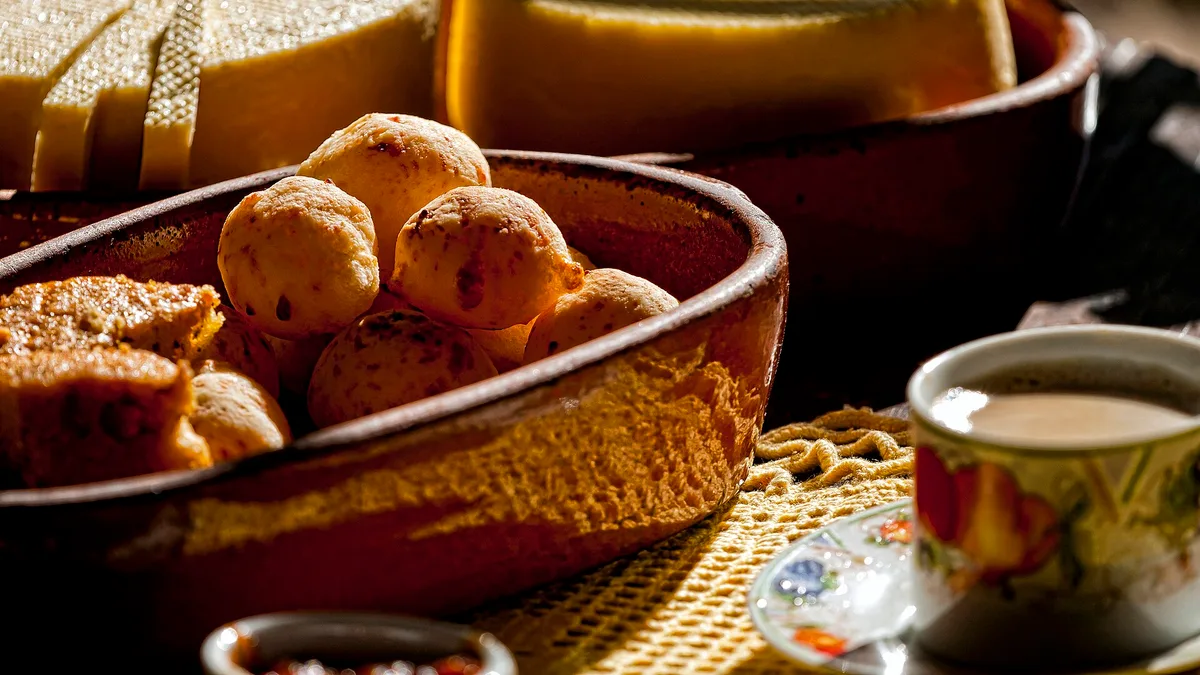
Spend a week in Brazil and you will notice that food never stays on the plate. A friend who cannot stop talking is "filling sausage", an easy exam is "bread with butter", and a relative who complains about everything is "full of nine o'clock". These Brazilian Portuguese food idioms are how people describe work, love, money and bad moods, and understanding them is a big step from textbook Portuguese to the real thing.
This guide gives you 20 of the most common food idioms in Brazil, with the literal translation, the actual meaning, and an example you can copy. Most are informal and used across the whole country.
Idioms About Easy and Hard Things
1. Ser pão com manteiga
Literally "to be bread with butter". It means something is very easy, a piece of cake.
Example: "A prova de ontem foi pão com manteiga." ("Yesterday's test was a piece of cake.")
2. Descascar o abacaxi
Literally "to peel the pineapple". A pineapple is a tricky problem, and peeling it means dealing with it, usually a problem someone else left behind.
Example: "O gerente saiu e agora eu tenho que descascar esse abacaxi." ("The manager left and now I have to sort out this mess.")
3. Comer o pão que o diabo amassou
Literally "to eat the bread the devil kneaded". It means to go through a very hard time, to suffer.
Example: "Nos primeiros anos em São Paulo ele comeu o pão que o diabo amassou." ("In his first years in São Paulo he had a really rough time.")
4. Chorar as pitangas
Literally "to cry the pitangas", a small red fruit from the Brazilian coast. It means to complain and moan endlessly, to have a good cry about your troubles.
Example: "Ela passou a tarde inteira chorando as pitangas para a chefe." ("She spent the whole afternoon moaning to her boss.")
5. Ir plantar batatas
Literally "to go plant potatoes". It is a way of telling someone to get lost, to go away and stop bothering you. Rude, but not vulgar.
Example: "Se ele reclamar de novo, manda ir plantar batatas." ("If he complains again, tell him to get lost.")
Idioms About Money and Work
6. Ganhar o pão
Literally "to earn the bread". It means to make a living, to earn your daily wage. The phrase "o pão de cada dia" (the bread of each day) means the daily grind.
Example: "Trabalho de motorista para ganhar o pão." ("I work as a driver to make a living.")
7. Ser farinha do mesmo saco
Literally "to be flour from the same sack". It describes two people who are exactly alike, usually in a bad way: same habits, same tricks.
Example: "O sócio dele é farinha do mesmo saco, os dois enrolam o cliente." ("His partner is cut from the same cloth, they both string customers along.")
8. Arroz de festa
Literally "party rice". Rice shows up at every Brazilian celebration, so an "arroz de festa" is a person who goes to every party and event, whether invited or not.
Example: "A Carla é arroz de festa, aparece em todo aniversário da empresa." ("Carla goes to everything, she turns up at every company birthday.")
9. Fazer um bico
Literally "to do a beak". A "bico" is an odd job, a side gig done for a bit of extra money.
Example: "Nos fins de semana ele faz uns bicos como garçom." ("At weekends he does some shifts as a waiter.")
10. Café pequeno
Literally "small coffee". It describes something unimportant, small change, not worth worrying about.
Example: "Uma multa de cinquenta reais? Isso é café pequeno." ("A fifty real fine? That is nothing.")
To hear these idioms in the mouths of real characters, our Brazilian Urban Chronicles are short stories set in Brazilian cities, written for learners and glossed as you go.
Idioms About People
11. Cheio de nove horas
Literally "full of nine o'clock". It describes a fussy, demanding person who complicates everything with rules and objections. The origin is debated, but every Brazilian knows exactly who you mean.
Example: "Meu tio é cheio de nove horas, não come nada fora de casa." ("My uncle is really fussy, he won't eat anything outside the house.")
12. Mala sem alça
Literally "a suitcase without a handle". Not food, but always in the same breath: a person who is a nuisance, hard to carry and impossible to get rid of.
Example: "Não convida o Rafael, ele é uma mala sem alça." ("Don't invite Rafael, he is a pain.")
13. Ser um bom garfo
Literally "to be a good fork". It describes someone who loves eating and eats a lot, a real foodie.
Example: "Pode preparar bastante, ele é um bom garfo." ("You can make plenty, he is a big eater.")
14. Ficar de queixo caído
Literally "to be left with a dropped chin". Amazed, jaw on the floor. Brazilians say it about food often, and about anything impressive.
Example: "Quando provei a moqueca fiquei de queixo caído." ("When I tasted the moqueca my jaw dropped.")
15. Ter caroço nesse angu
Literally "to have a stone in this cornmeal". Angu is a smooth corn porridge, so a lump in it means something suspicious, a hidden problem in a deal or a story.
Example: "Ele quer vender o carro por esse preço? Tem caroço nesse angu." ("He wants to sell the car for that price? Something is fishy.")
Idioms About Feelings and Relationships
16. Estar de mal com a vida
Literally "to be on bad terms with life". Not a food idiom on its own, but you will hear it in the same conversations: to be down, fed up with everything.
Example: "Hoje ela está de mal com a vida, nem quis almoçar." ("Today she is fed up with everything, she didn't even want lunch.")
17. Trocar seis por meia dúzia
Literally "to swap six for half a dozen". It means to change something for something identical, a pointless change. Often used about market swaps and politics.
Example: "Mudar de fornecedor foi trocar seis por meia dúzia." ("Changing supplier was swapping six for half a dozen.")
18. Misturar alhos com bugalhos
Literally "to mix garlic with oak galls". It means to mix up two completely different things, to confuse the issue.
Example: "Você está misturando alhos com bugalhos, uma coisa não tem nada a ver com a outra." ("You are mixing apples and oranges, one thing has nothing to do with the other.")
19. Engolir em seco
Literally "to swallow dry". It means to swallow hard, to accept something unpleasant without saying anything, often with a lump in your throat.
Example: "Ouviu a crítica, engoliu em seco e continuou trabalhando." ("He heard the criticism, swallowed hard and kept working.")
20. Dar bolo em alguém
Literally "to give someone a cake". It means to stand someone up, to not show up for a date or a meeting. The person who was left waiting "levou um bolo" (took a cake).
Example: "Marcamos às oito e ela me deu um bolo." ("We agreed on eight and she stood me up.")
How to Make These Idioms Yours
Food idioms are the easiest kind to remember because the image is concrete and usually funny. To turn recognition into use:
- Pick three you can drop into your next conversation. "Pão com manteiga", "café pequeno" and "cheio de nove horas" are safe, common and always get a smile.
- Learn the dish behind the idiom. Once you have eaten angu or pitanga, "caroço nesse angu" and "chorar as pitangas" stop being random words.
- Read Brazilian Portuguese written the way people speak it. Idioms are rare in grammar books and everywhere in stories and dialogue.
To keep going, read 20 Brazilian Portuguese idioms locals use every day for the general set, compare with 20 Spanish food idioms and what they mean to see how the neighbours cook up their language, and learn 20 Brazilian Portuguese slang words for the informal register. For practice in context, Travel Stories in Brazilian Portuguese and The 5-Minute Brazilian Portuguese Journal for Beginners are the natural next step.