20 French Food Idioms and Their English Meanings
The French describe life through the kitchen: a nosy person puts their grain of salt everywhere, a lazy one has bread on the board, and losing your temper means the mustard rises to your nose. Here are 20 French food idioms with meanings and examples.
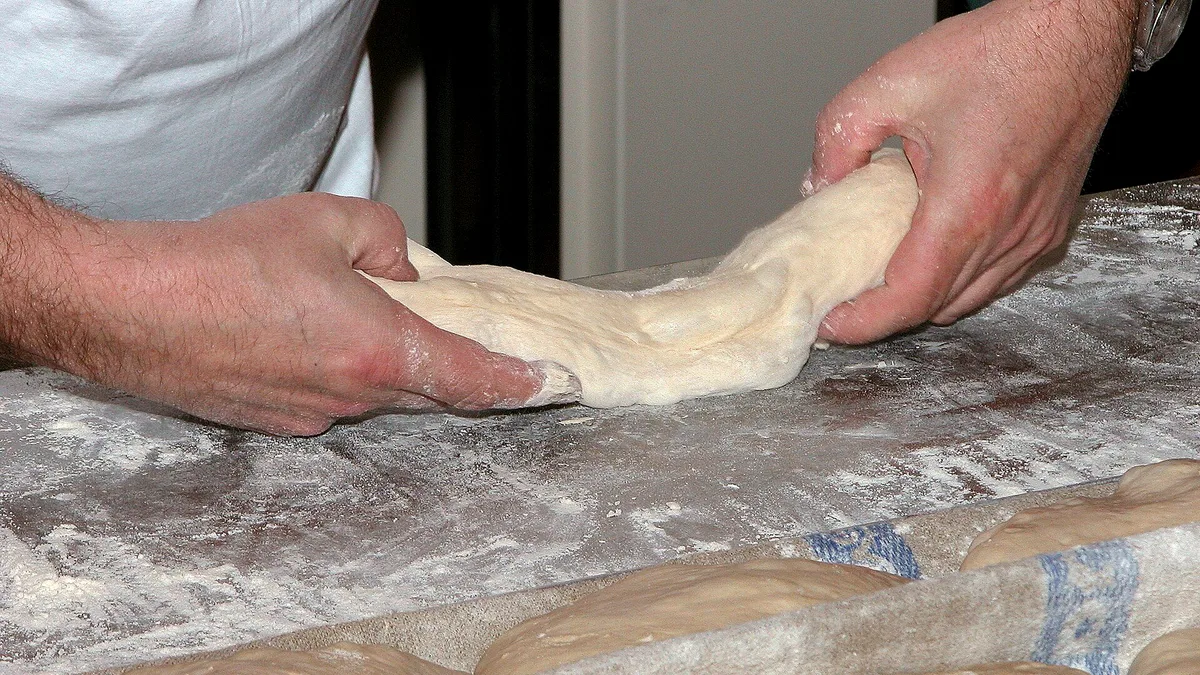
It is no surprise that a country this serious about eating talks about everything else through food. In French, work waiting to be done is "bread on the board", a difficult person "makes a whole cheese" of nothing, and someone who is getting angry has "mustard rising to the nose". Learn these French food idioms and you unlock a whole layer of everyday conversation that dictionaries rarely explain.
This guide covers 20 food idioms you will hear in France, with the literal translation, the real meaning, and an example. We have left out the most famous ones already covered in our everyday French idioms guide, so everything here is new.
Idioms About Bread
1. Avoir du pain sur la planche
Literally "to have bread on the board". It means to have a lot of work ahead of you, a full plate.
Example: "Avec le déménagement, on a du pain sur la planche." ("With the move, we have a lot on our plate.")
2. Ça ne mange pas de pain
Literally "it doesn't eat bread". It means something costs nothing, does no harm, so you might as well do it.
Example: "Envoie-lui un message, ça ne mange pas de pain." ("Send him a message, it can't hurt.")
3. Être bon comme le pain
Literally "to be good like bread". It describes a kind, generous person with a heart of gold.
Example: "Ma grand-mère était bonne comme le pain." ("My grandmother was the kindest person.")
4. Long comme un jour sans pain
Literally "as long as a day without bread". It describes something endless and tedious, a very long wait or a very long speech.
Example: "La réunion était longue comme un jour sans pain." ("The meeting went on forever.")
Idioms About Cheese, Butter and Eggs
5. Mettre du beurre dans les épinards
Literally "to put butter in the spinach". It means to improve your finances a little, to earn some extra money that makes life more comfortable.
Example: "Elle donne des cours le soir, ça met du beurre dans les épinards." ("She teaches in the evenings, it helps make ends meet.")
6. Compter pour du beurre
Literally "to count for butter". It means to count for nothing, to not matter. Children say it in games about a round that does not count.
Example: "Ce premier essai compte pour du beurre." ("This first try doesn't count.")
7. Marcher sur des œufs
Literally "to walk on eggs". It means to tread very carefully in a delicate situation, the same image as walking on eggshells in English.
Example: "Depuis leur dispute, je marche sur des œufs avec lui." ("Since their argument, I have been walking on eggshells around him.")
8. Mettre tous ses œufs dans le même panier
Literally "to put all your eggs in the same basket". It means to risk everything on a single option. English has the same one, and the French use it just as often.
Example: "N'investis pas tout dans une seule entreprise, ne mets pas tous tes œufs dans le même panier." ("Don't invest everything in one company, don't put all your eggs in one basket.")
Idioms About Vegetables and Fruit
9. Faire chou blanc
Literally "to make white cabbage". It means to fail completely, to come back empty handed.
Example: "J'ai cherché ce livre dans trois librairies et j'ai fait chou blanc." ("I looked for that book in three bookshops and came up with nothing.")
10. Être dans les choux
Literally "to be in the cabbages". It means to be in a bad position, last in a race, or in trouble.
Example: "Après la troisième course, notre équipe était dans les choux." ("After the third race, our team was way behind.")
11. Avoir un cœur d'artichaut
Literally "to have an artichoke heart". It describes someone who falls in love easily and often, one leaf at a time.
Example: "Il tombe amoureux tous les mois, il a un cœur d'artichaut." ("He falls in love every month, he is a hopeless romantic.")
12. Se prendre le chou
Literally "to take the cabbage", where "chou" stands for the head. It means to overthink, to stress about something, or to argue with someone.
Example: "Arrête de te prendre le chou pour cet examen." ("Stop stressing about that exam.")
13. Ramener sa fraise
Literally "to bring your strawberry". It means to show up where you were not invited, or to butt into a conversation with your opinion.
Example: "Personne ne t'a demandé ton avis, arrête de ramener ta fraise." ("Nobody asked your opinion, stop butting in.")
If you want to hear these expressions in real dialogue rather than in a list, our Colloquial French Stories are written the way French people actually speak, with the idioms glossed as you read.
Idioms About Wine, Mustard and the Rest of the Kitchen
14. Mettre de l'eau dans son vin
Literally "to put water in your wine". It means to tone down your demands, to compromise and be more moderate.
Example: "Pour que le projet avance, il a dû mettre de l'eau dans son vin." ("To move the project forward, he had to compromise.")
15. La moutarde me monte au nez
Literally "the mustard is rising to my nose". It means I am starting to get angry, I am losing my patience.
Example: "Quand il a répété la même excuse, la moutarde m'est montée au nez." ("When he repeated the same excuse, I started to lose my temper.")
16. Être soupe au lait
Literally "to be milk soup". Milk boils over in a second, so a "soupe au lait" person flares up quickly and calms down just as fast.
Example: "Ne le taquine pas, il est soupe au lait." ("Don't tease him, he has a short fuse.")
17. Occupe-toi de tes oignons
Literally "take care of your onions". It means mind your own business.
Example: "Ce que je fais le week-end ne te regarde pas, occupe-toi de tes oignons." ("What I do at the weekend is none of your concern, mind your own business.")
18. Ce n'est pas de la tarte
Literally "it is not pie". It means something is not easy, a real challenge. The opposite of the English "piece of cake".
Example: "Trouver un appartement à Paris, ce n'est pas de la tarte." ("Finding a flat in Paris is no easy task.")
19. Avoir la banane
Literally "to have the banana". It means to have a big smile, to be in a great mood. The banana is the shape of the grin.
Example: "Depuis qu'elle a eu la réponse, elle a la banane." ("Since she got the answer, she has been all smiles.")
20. Les carottes sont cuites
Literally "the carrots are cooked". It means it is all over, there is nothing left to be done, the game is up.
Example: "Ils mènent trois à zéro à la dernière minute, les carottes sont cuites." ("They are leading three nil in the final minute, it's over.")
How to Make These Idioms Yours
Food idioms are the friendliest kind to learn because the image is vivid and usually funny. A few tips:
- Group them by ingredient. Bread, cabbage and butter each carry three or four idioms, and learning them together makes the whole family stick.
- Pick two you can use this week. "Ça ne mange pas de pain" and "occupe-toi de tes oignons" are common, safe, and instantly natural.
- Read and listen to French as it is spoken. Idioms are rare in grammar books and everywhere in conversation, series and stories.
To keep going, read our 20 everyday French idioms for the essentials, 25 French proverbs about life and love for the wisdom, and compare with 20 Spanish food idioms to see how the neighbours season their language. For practice in context, our French Phrasebook and Short Stories in French are the natural next step.